
Thursday, November 20 2025
Updated with reader responses.
In a question in the Headscratcher series, Lee Smith posited that personality is individually bestowed when the infant takes its first breath after birth. He came to that conclusion from his reading of The Urantia Book, acknowledging it is in stark contrast to a Christian/Biblical viewpoint that “personhood” begins in the womb, even at the moment of conception. He graciously asked for feedback, and so here is mine:
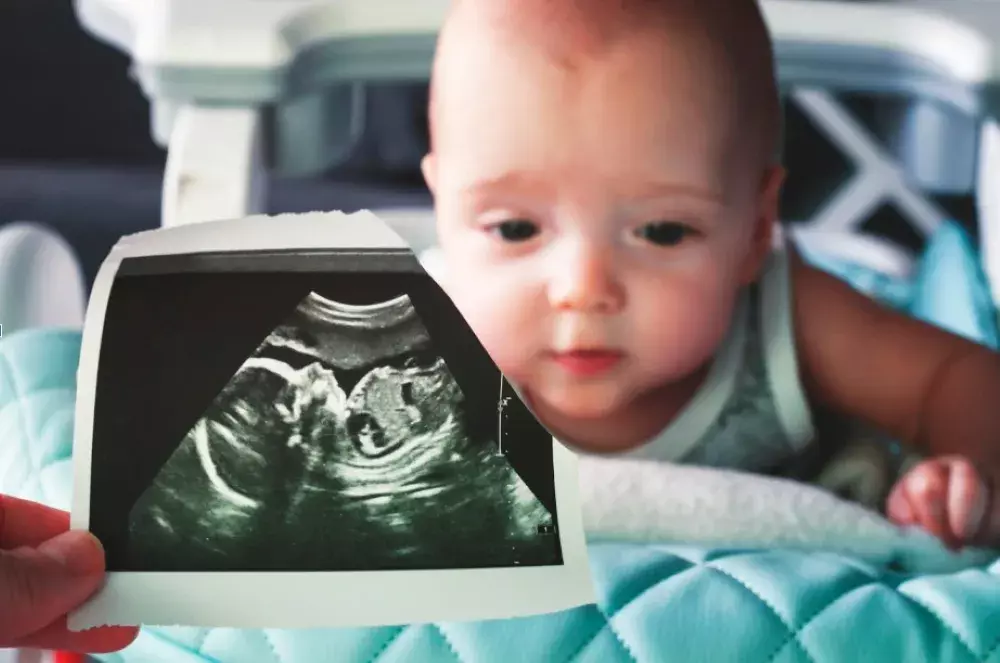
Dear Lee, the question in your title, I think, takes us in a direction that may not get to the heart of the issue. A more accurate framing might be: “Is the Embryo a Potential Person?”
Once we phrase it that way, the answer becomes self-evident. The discussion about when personality is bestowed, while interesting, is no longer essential. The timing of that bestowal does not alter the essential truth—the embryo represents the potential of a human being.
You also asked, “What aspect of the zygote or embryo is actually being morontially restored?” The Urantia Book offers a clear answer to that: “These wards of the finaliters, these infants of ascending mortals, are always personalized as of their exact physical status at the time of death, except for reproductive potential. This awakening occurs at the exact time of the parental arrival on the first mansion world. And then are these children given every opportunity, as they are, to choose the heavenly way just as they would have made such a choice on the worlds where death so untimely terminated their careers.” (47:2.2)
Whether the egg divides within two hours or five days is irrelevant. The moment life begins, the divine potential of personality exists. There is, in that zygote, a future child of God—a potential Finaliter.
You also wondered whether a morontial soul might exist in the womb. The answer, according to The Urantia Book, is no. A soul is not pre-existent; it is co-created when a human mind and a Thought Adjuster begin to function together. This occurs only when a child reaches moral awareness, typically around the age of six. This is the beginning of a potentially immortal soul. One that could not be in existence without the first step, the meeting of the sperm and the egg.
The persistent debate about “when life begins” is cleared up definitively when the book tells us: “A child has been in existence about nine months before it experiences birth” (103:2.1). If you believe The Urantia Book is the authoritative elimination of error the debate would end there. However, let us continue to reason together.
If a child is personalized on the probationary nursery as of their exact physical status, and that child is in existence for nine months before it is born, there must be some accommodation for those children who cannot yet survive outside of a womb. It is not difficult to imagine that an advanced system is present on the probationary nursery capable of fostering a fetus into full form—allowing it to grow and eventually live apart from the artificial womb it is being nurtured in.
In the simplest biological sense, when sperm unites with egg, a new life begins. It is not yet a person, but it is unquestionably the potential of one. If life is terminated before birth, whether by natural loss or human choice, a potential destiny is interrupted. That child, having never lived a full mortal life, loses a very important avenue of experience. Yet the mercy of the universe remains absolute. The Urantia Book assures us, “Nothing of survival value is ever lost in all the wide universe” (109:3.2). Such assurance reminds us that our God does everything possible to save all of those who have begun the adventure of time.
This truth comforts anyone who has faced miscarriage, stillbirth, or abortion. The Father’s care extends beyond our material understanding. Those who are lost to this earthly realm awaken in the probationary nursery and are nurtured until they reach the age of moral choice and Thought Adjuster indwelling. Then they are raised in families of five and will there make a decision for eternity or not.
Bringing a child into being is not merely a biological act. It is a partnership with the Father—a participation in creation itself. Through parenthood, we provide a vehicle for the indwelling spirit and for the eventual emergence of a surviving soul, not to mention developing an understanding of what it means to be a parent. As Kahlil Gibran said, “Your children are not your children. They are the sons and daughters of Life’s longing for itself. They come through you but not from you, and though they are with you yet they belong not to you.”
I believe that recognizing the act of bringing children into the world as a gift to the Father is essential to achieving a higher type of civilization.
We often think of ourselves as modern because we can control our own bodies—and so we do. Many people also feel that calling abortion, under any circumstance, an act of murder is too harsh or shaming. I understand that reaction; it does sound severe. But as religionists, how should we see it? Do we truly value the sanctity of life—and see a child as a precious gift from God? Those of us who study this revelation are deeply aware of the greatness of our potential eternal destiny.
However, we find ourselves at this point in time, during the era of material comfort on Urantia. The opinions people hold about abortion will not change unless a larger perspective about what is at stake is understood. But I think it is so sad that young women stand up with picket signs demanding the right to an abortion with seemingly no regard to the life they are willing to destroy. Again, that sort of sentiment will only change when the wider world starts to understand the import of our actions.
Should abortion be legal? I think so because you can’t legislate morality and each person needs to do what they think is best. I was surprised to learn that a review (cited by the Cincinnati Right to Life website) states that only about 1% to 3% of abortions are for medical reasons. The rest are for financial struggles, timing, family responsibilities, school or work conflicts, or relationship problems. I am not blaming or shaming. The Urantia Book tells us we live in a sin-stricken, evil dominated, and self-seeking world. It’s no wonder that something like this is not only normalized but being pro-life in some social circles can get you a ticket right out the door.
Additionally, we must remember that each and every revelation we have received builds upon the one before it. None negates what came earlier. From the very first epochal revelation, humanity was given a commandment that should still be at the forefront of our minds: “You shall not kill.” But not many people these days have any of the ten commandments in their minds, let alone written in their hearts.
“No professed revelation of religion could be regarded as authentic if it failed to recognize the duty demands of ethical obligation which had been created and fostered by preceding evolutionary religion. Revelation unfailingly enlarges the ethical horizon of evolved religion while it simultaneously and unfailingly expands the moral obligations of all prior revelations” (101:9.1). So morality is the key. Without it, we are lost. If we are seeking a religious consciousness without a moral foundation, we will fail.
Respect for life, even at its earliest potential, aligns us with divine purpose. It acknowledges the Father as the source of life and affirms that every spark of existence carries within it a capacity for unlimited attainment and spiritual growth. Some day we will wake up and realize that. I believe this world will never really be civilized until we understand that having a child is giving a gift to the Father (where is that quote?).
The revelators intimate that we are not nearly as civilized as we think we are and still have savage-like tendencies. Could our views on abortion be a part of that? They remind us that “It was long the custom for a maiden to kill her offspring, but among more civilized groups these illegitimate children became the wards of the girl's mother.” They are telling us that a more civilized group can figure out ways to deal with unwanted pregnancies without resorting to abortion.
Let me confess that I have not always thought this way. In high school, I took a friend to have an abortion and didn’t think much about it. And I have had plenty of friends who endured it. I never had a judgment about it. However, when a woman I worked with told me nonchalantly that she would abort her third child because she didn’t want to deal with it, I found that startling.
The world has persuaded us to think about it a certain way. But we are called to have courageous and independent cosmic thinking when dealing with issues like this. We tend to put our own personal lives and what we think would make us more comfortable above so much that is truly important is the norm. I am not immune to that type of thinking, by any means. Drawing our own conclusions about this thorny issue is difficult but, as religionists, I believe it’s essential.
Those who have had to endure an abortion, stillbirth, or miscarriage might find it very helpful to consider that the child they lost will be waiting in the probationary nursery. What a glorious day that will be!
In closing, Lee, I appreciate your question and invitation to reply. My answer reflects my understanding of whether a fetus is a person based on The Urantia Book and my knowledge of our Christian heritage. The embryo may not yet possess a personality or a soul, but it unquestionably embodies the potential of a human being. That potential—divine in origin and eternal in destiny—deserves our most profound respect and thoughtfulness as we consider our opinions about this.
Tom O’Keefe writes:
I want to thank Andre Barnes for her beautiful response to Lee Smith’s question in the September 25th edition of the Mini Messenger in which he asked: “Is There a Person in the Womb?”, and “What aspect of the zygote or embryo is actually being morontially restored?” (Headscratcher series)
Andrea’s well-thought out response is one I wish all expectant parents would have access to before they make such an important life-altering decision regarding aborting the life they have been given responsibility for.
The Urantia Book tells us that those Urantia mortals who don’t live past five with an Adjuster may attain Paradise, but they are frozen out of the ranks of the Corps of Finality: “...These children who have been deprived of the valuable and essential evolutionary experience on the worlds of mortal nativity are not mustered into the Corps of the Finality” (47:2.8). How many potential Corps members have we lost or are we losing currently? The CDC says over one million fetuses were aborted in 2023 and 200,000 are being aborted daily world wide, or 73 million annually. In thirty years, 1.6 to 1.7 billion have been aborted. This is by far more than any wars combined during that same period. How many of these potential finaliters would have offered great things to our world and the Universe? I guess we will never know.
I would like to echo a touching sentiment in Andrea’s essay that is so true: As Kahlil Gibran said, “Your children are not your children. They are the sons and daughters of Life’s longing for itself. They come through you but not from you, and though they are with you yet they belong not to you.” I believe that recognizing the act of bringing children into the world as a gift to the Father is essential to achieving a higher type of civilization.
Michelle Klimesh writes:
Lee Smith initiated a conversation by email almost exactly four years ago on this same topic. I dug up my response to that thread in response to Andrea Barnes's recent sharing.
December 5, 2021
Dear Lee and all,
Thanks for starting this conversation. Here are my thoughts, in somewhat random order.
1. Personality is undefined in The Urantia Book, but for some reason, my arrogance compels me to define it.
2. My definition is: Personality is the state of being a person.
3. People are animals, but animals are not always people.
4. I do not believe an embryo is a person. It’s a potential person. Here’s why.
5. Is a lemon seed a lemon tree? It might become a fruit-producing tree some day if we add soil and water and sunshine and fertilizer and several years of time. Under the right conditions, a lemon seed might sprout and take root and become a sapling and eventually grow into a lemon tree. But a seed is not a tree. It’s not even a piece of fruit.
6. I think infants are more like animals than they are like people. They can’t care for themselves. Their brains are so plastic that they grow and change at enormous speed for many months. They pass through several definite stages before they even start school. They might become productive people one day if we feed them and shelter them and water them and clean them and teach them useful information and good manners for a couple of decades. I think it’s possible, even likely, that babies fall into the “animal-but-not-person” category. I’m not sure, but even at birth the child might not be a real person.
7. We know for sure that personality is bestowed before the arrival of the Thought Adjuster, which happens on average a bit before a person’s sixth birthday. So most six-year-old humans are people.
8. Re: “a child has existed for nine months” doesn’t seem pertinent. I existed in my mother’s womb for thirty-eight weeks as an adorable little parasite, not a person. Trees exist. Mountains exist. Existence does not denote personhood.
9. Each personality is unique in all the universe. Why would God waste something so precious on an undeveloped physical life mechanism that has such low odds of viability in the womb? It seems unlikely. To be fair, a friend presented a counter argument: since God is infinite, he wouldn’t care if half of his personality gifts were wasted because half of infinity is still infinite.
10. By conservative estimate, 40,000+ children have attended classes at my gymnastics school in the past fifty years. Watching thousands of kids evolve over nearly my entire lifetime informs me that the younger the children are, the more beautifully BF Skinner's behavior modification methods work. Little kids often act like animals and rarely act like grownups, and they operate with only the first five adjutants, as do the animals.
11. On the other hand, I’ve given birth twice, and I fell instantly in love both times. When my second daughter was born, I had given the nurse the chosen name (Samantha Ann) and she wrote it on the nursery crib label. But when they laid the baby on me, she wasn’t the child I expected. I made the nurse change the name. My daughter became Diana Marie, even though nothing had changed except my feeling about her.
What do you make of that? Maybe it was the drugs, which is what I think the nurse was thinking. Maybe an actual person came into the world that day. I don’t know. What I think and what I feel don’t always match about this topic.
This conversation is useful. It’s fun to watch many brains working on the same intriguing puzzle simultaneously. It is also nice to know we haven't been entirely brainwashed by religion, as evidenced by the range of our perspectives on this intricate subject.
Bill Scharfenberg writes:
I severely disagree with the recent (1970s) assertion by the American Christian church that life and identity begins at conception. The entirety of the Judeo Christian Bible asserts that life begins at first breath. This is still the teaching of modern Jews. The life vessel, the body, does develop for nine months, but existence as an individual begins at birth, the first breath. The mind, as opposed to the brain, begins its development at this point.
In my humble opinion, identity begins at birth. From an eternity viewpoint, the potential human is already a finaliter, but we are constrained by the time-space perspective inside an evolving universe. To me, this means that the potential personality is not bestowed until birth.
Unfortunately, American politics has caused a distortion in the American Christian church, leading to what I believe is spiritual error.
I considered myself a scientist before I became a follower of Joshua Ben Joseph. I graduated from high school in 1975, so I remember when the American Christian church started teaching the sophistry that abortion is a sin, and that human life begins at conception, in response to the civil rights movement and the women's rights successes of the 1960s and early 1970s. Even the Catholic Church wasn't anti-abortion until this point.
I have been a student of The Urantia Book since 1987. I'm on my 15th or 16th read through, from "cover to cover", the introduction to the last page, in order. I am endeavoring to use the Master's technique of emphasis on the better part rather than bringing attention to the error in all my teaching and discussions.


Comments
By posting, you agree to follow our Community Standards.